
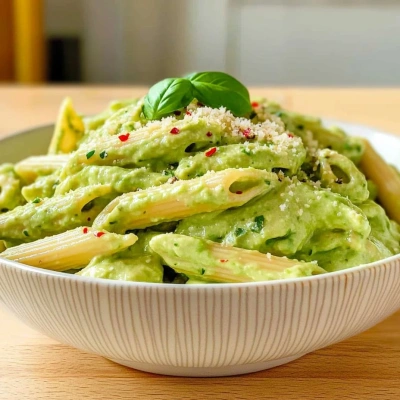
Creamy Avocado Pasta is a bright, silky pasta dish made with ripe avocado, herbs, lemon, and a little heat. You should make it because it delivers luxurious texture in minutes, with a fresh, clean flavor that feels both comforting and light. I first fell for this kind of sauce while watching simple home cooks transform humble ingredients into something almost decadent. The aroma of garlic and citrus, the glossy green sheen, and the way the sauce coats every noodle make it a dish I return to whenever I want fast food that still tastes thoughtfully composed.
Why I Love This Recipe
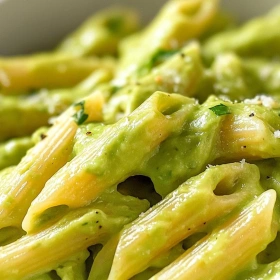
What I love most about Creamy Avocado Pasta is how it borrows the soul of Mediterranean and Latin-inspired cooking without feeling tied to one place. Avocado brings that buttery richness, while lemon and herbs keep everything lifted and alive. As a chef, I’m fascinated by the technique: instead of relying on cream, the sauce emulsifies naturally, creating a plush, almost mousse-like texture that clings beautifully to pasta. It reminds me of summer kitchens where ripe produce is treated with respect and very little fuss. There’s something deeply satisfying about watching a simple green sauce turn glossy in the blender, then seeing it settle into the pasta like velvet. It feels fresh, modern, and a little bit magical.
What You Need From Your Kitchen
Blender or food processor
Essential for emulsifying the avocado into a smooth, glossy sauce that coats the pasta evenly
Large pot
Needed to boil the pasta properly so the starch helps the sauce cling
Colander
Useful for draining the pasta while reserving a little starchy water to loosen the sauce
Tongs
Best for tossing the hot pasta with the avocado sauce without breaking the noodles
Microplane or fine grater
Helps grate garlic or zest lemon finely so the flavor disperses cleanly through the sauce
Perfect Pairings
Crisp Sauvignon Blanc
Its citrusy acidity cuts through the avocado’s richness and refreshes the palate
Arugula salad with shaved Parmesan
Peppery greens and salty cheese balance the creamy, herb-forward pasta
Garlic bread or toasted sourdough
The crunchy edges are perfect for scooping up every bit of sauce
Grilled shrimp or roasted chickpeas
Both add savory contrast and make the dish feel more complete for dinner
Casual spring lunch or meatless date night
The bright color and silky texture make it feel special without being heavy
Pro Tips
- Salt the pasta water generously and cook the pasta just to al dente. A firm bite matters here because the sauce is soft and rich; overcooked pasta turns the whole dish heavy and mushy.
- Blend the avocado with lemon juice first, then add herbs, garlic, and olive oil. Acid protects the avocado’s color and sharpens the flavor, giving the sauce a brighter, more restaurant-style finish.
- Reserve a little pasta water before draining. The starch helps emulsify the avocado sauce, turning it from thick purée into a glossy coating that clings beautifully to every ridge and curve of the pasta.
- Use ripe avocados that yield gently to pressure but aren’t stringy or over-soft. Perfect ripeness gives the sauce that buttery, almost custard-like texture that makes this dish feel luxurious without any cream.
- Toss the pasta with the sauce off the heat. High heat can mute the fresh basil or cilantro notes and make the avocado taste flat; gentle warmth preserves the vivid, garden-fresh character.
🍳 Your Cooking Progress
Ingredients Gathered
0/12 CompleteCooking Steps
0/7 CompleteRecipe Mastery
0% CompleteCreamy Avocado Pasta
Creamy Avocado Pasta turns ripe avocados into a glossy, restaurant-style sauce that clings to every ridge of pasta. A quick blitz with garlic, herbs, and citrus creates a chilled-meets-warm contrast that feels both modern and deeply satisfying.
Ingredients
💡 Click on ingredients to check them off!
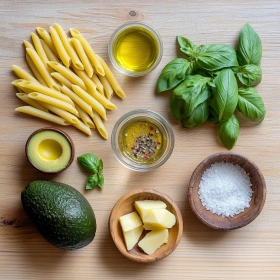
- 12 ounces penne pasta
- 2 ripe avocados, pitted and peeled
- 2 tablespoons extra-virgin olive oil
- 2 tablespoons fresh lemon juice
- 2 cloves garlic, minced
- 1/4 cup fresh basil leaves, packed
- 1/4 cup fresh parsley leaves, packed
- 1/4 cup grated Parmesan cheese
- 1/2 teaspoon fine sea salt
- 1/4 teaspoon freshly ground black pepper
- 1/4 teaspoon red pepper flakes
- 1/3 cup reserved pasta cooking water
Instructions
💡 Click on steps to mark as complete!
-
1Boil the pastaBring a large pot of well-salted water to a rolling boil and cook the penne until just al dente. The pasta should still have a slight bite, because it will finish in the sauce and absorb flavor without turning soft or gummy.
-
2Build the avocado baseIn a food processor or blender, combine the avocados, olive oil, lemon juice, garlic, basil, parsley, Parmesan, salt, pepper, and red pepper flakes. Blend until silky and vividly green, scraping down the sides so the sauce emulsifies evenly.
-
3Adjust the textureWith the motor running, stream in the reserved pasta water a little at a time until the sauce becomes glossy and spoonable. This step is key: the starch in the water helps the avocado cling to the pasta instead of sliding off.
-
4Drain with careDrain the pasta promptly, reserving a bit more cooking water in case you need to loosen the sauce later. Do not rinse the pasta, since the surface starch helps the creamy avocado coating grip every ridge and hollow.
-
5Toss while warmReturn the hot pasta to the pot or a large bowl and add the avocado sauce. Toss immediately and thoroughly so the warmth gently perfumes the herbs and garlic, creating a lush coating with a fresh, garden-bright aroma.
-
6Fine-tune and seasonTaste the pasta and adjust with more salt, pepper, lemon juice, or a splash of pasta water. A proper finish should feel creamy, lightly tangy, and balanced, with the avocado tasting rich rather than heavy.
-
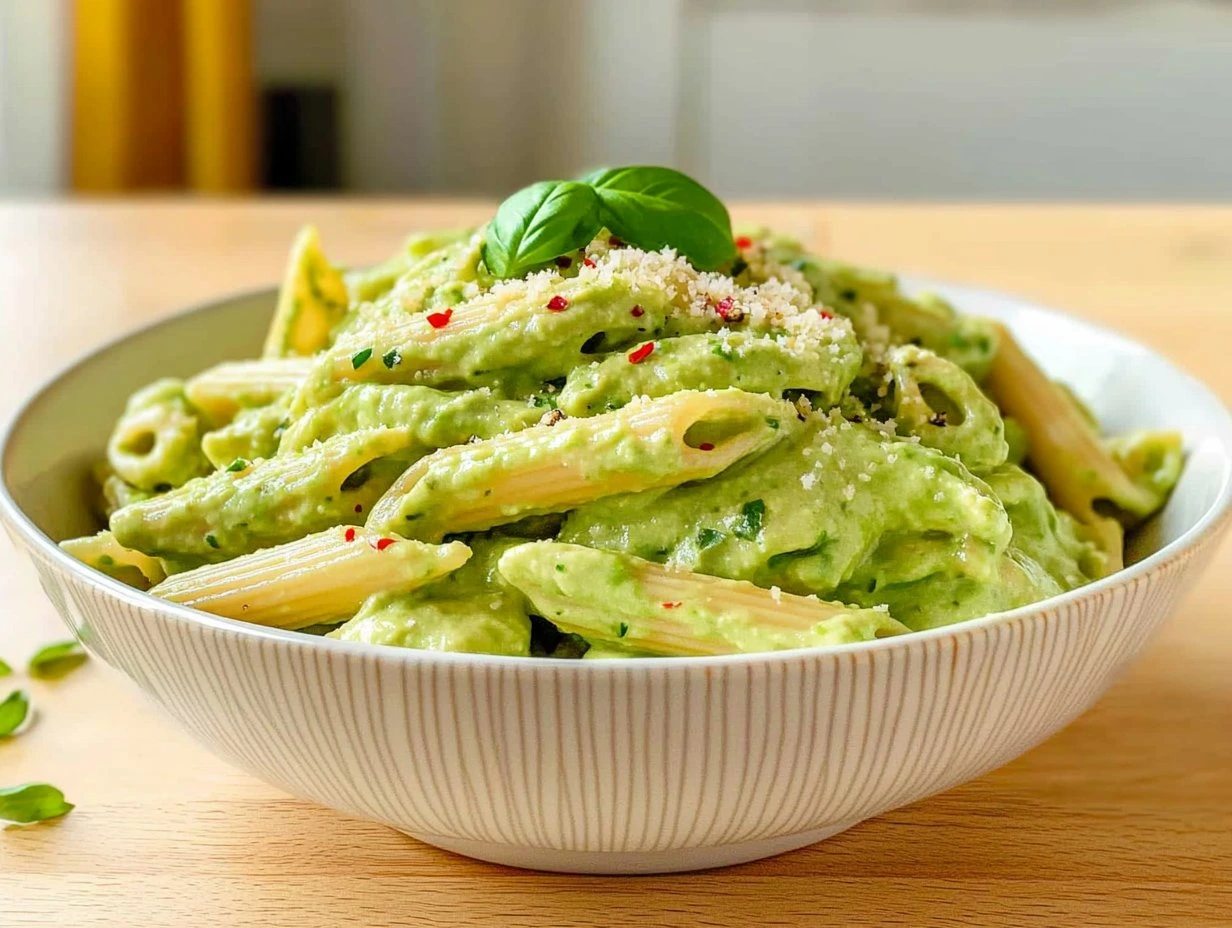
7Serve beautifullyDivide into warm bowls and finish with extra red pepper flakes, a drizzle of olive oil, or a little Parmesan if desired. Serve right away for the best emerald color and the most vibrant, velvety texture.
Nutrition Facts (Per Serving)
Chef's Notes
- Store leftover Creamy Avocado Pasta in an airtight container with plastic wrap pressed directly onto the surface to slow browning. It stays freshest for 1 day, with the avocado sauce keeping its silky, grassy flavor best when chilled.
- If the sauce thickens after refrigeration, loosen it with a splash of reserved pasta water or a little lemon juice before serving. This restores the glossy, clingy texture without dulling the bright avocado flavor.
- For a make-ahead shortcut, blend the avocado sauce up to 4 hours in advance, then cover tightly and refrigerate with the pit removed. Add it to freshly cooked pasta just before serving for the greenest color.
- This dish is best with short pasta shapes like penne or fusilli because the creamy avocado coating nestles into ridges and spirals. Long noodles can work, but they won’t hold the sauce as evenly.
- If you want to pack it for lunch, keep the pasta and sauce separate until the morning. Toss them together right before eating so the herbs stay vivid and the avocado stays lush, not oxidized.